Flight 1
Fire
A fuel line fitting corroded by salt spray leaked and caught fire. Falcon 1 fell back onto the reef less than a minute after liftoff.
Mission lost
Launch control
Starbase, Texas
25.99° N
97.16° W
Terminal count
T-10
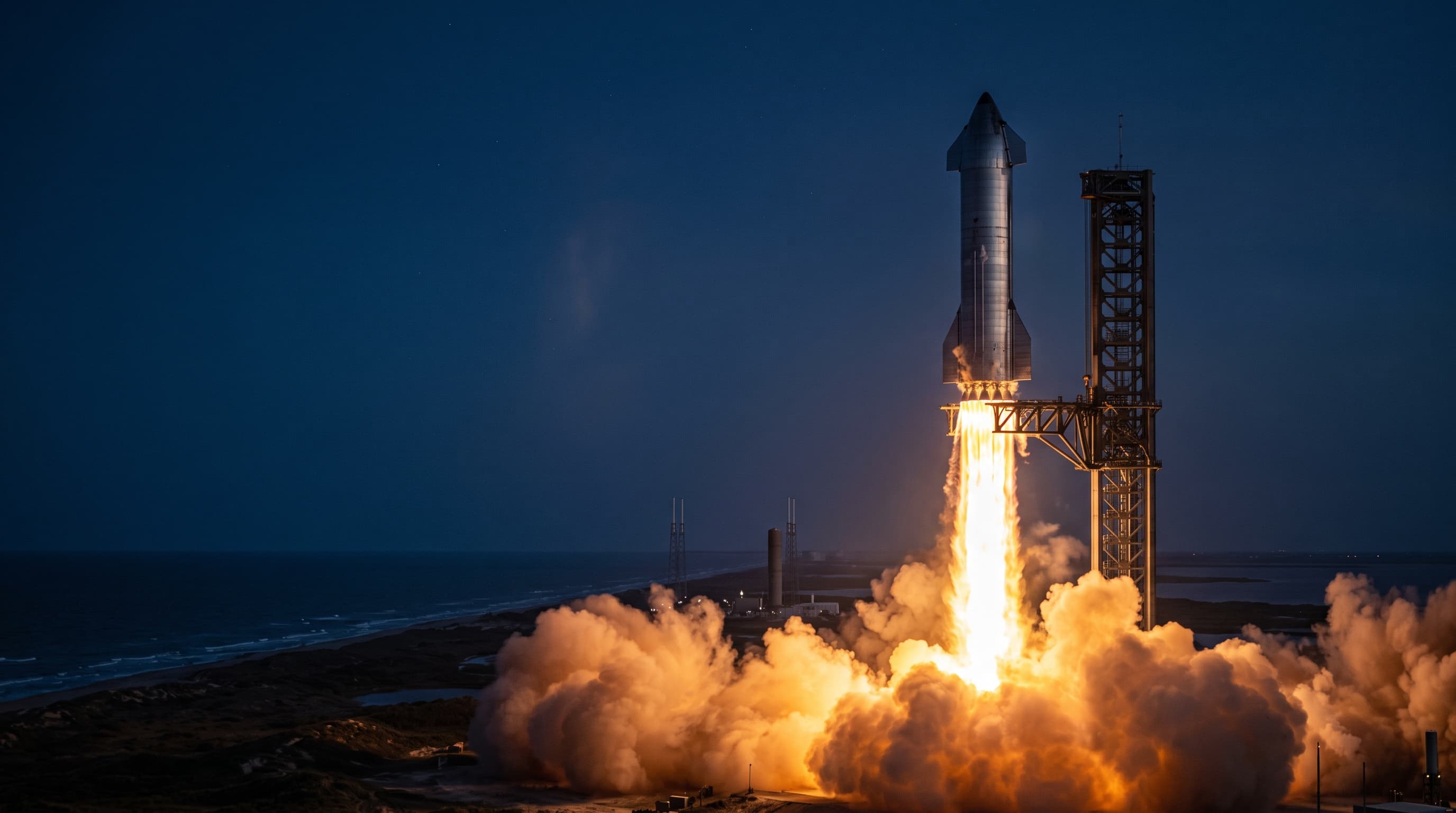
Space Exploration Technologies, est. 2002
From three failed launches on a Pacific atoll to the most powerful rocket ever flown. This is the engineering, the data and the relentless will behind it.
02Determination
Falcon 1 was SpaceX's first rocket, launched from a speck of coral in the middle of the Pacific. It failed three times in a row. By August 2008 there was money for one more attempt.
Omelek Island, Kwajalein Atoll
9.05° N, 167.74° E
Fire
A fuel line fitting corroded by salt spray leaked and caught fire. Falcon 1 fell back onto the reef less than a minute after liftoff.
Mission lost
Spin
It reached space, but sloshing propellant sent the upper stage into a spiral and its engine shut down short of orbit.
Mission lost
Recontact
Leftover thrust from a new first-stage engine pushed it back into the upper stage moments after separation.
Mission lost
Orbit
The first privately developed liquid-fuelled rocket to reach Earth orbit, built by a company that refused to stop.
Orbit achieved
Three months after the fourth flight, NASA awarded SpaceX a $1.6 billion contract for 12 cargo flights to the International Space Station. The company that nearly ran out of money became one NASA would trust with its station.
23 December 2008
For my part, I will never give up, and I mean never.
03The fleet
Four generations of launch vehicles, drawn to scale on the same ground line. Select one to inspect it.
Drawn to scaleHeight in metres
The first fully reusable super heavy-lift system, built to carry crew and cargo to orbit, the Moon and Mars.
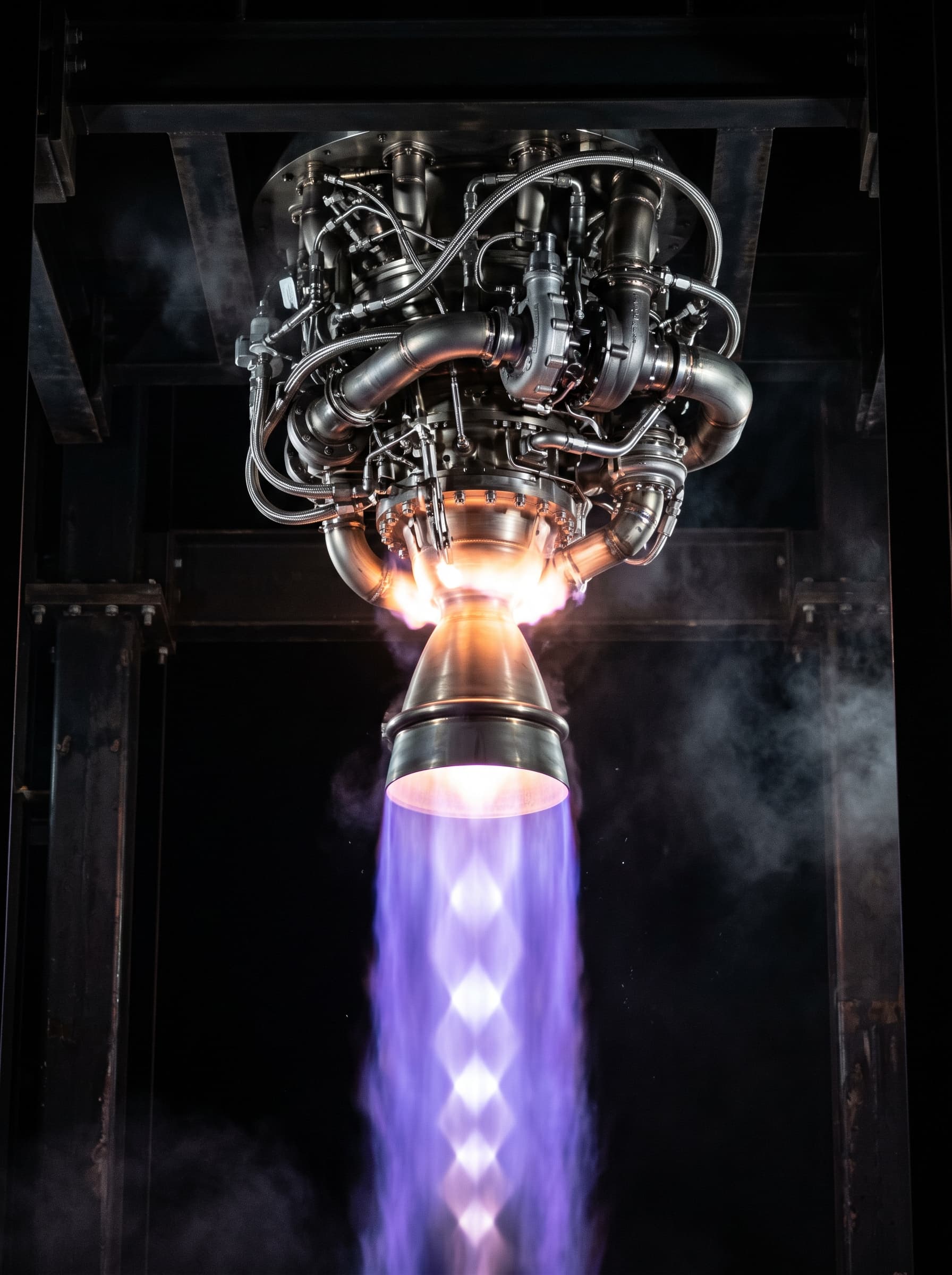
Raptor 3
Sea-level variant
Liquid methane + liquid oxygen
Full-flow staged combustion
Concept render
04Engineering
Raptor is the first full-flow staged combustion engine ever to fly. Methane and oxygen each drive their own turbine before they meet in the main chamber, squeezing more work out of every kilogram. It burns methane because methane can be made on Mars.
Source: SpaceX published Raptor figures, August 2024
“Failure is an option here. If things are not failing, you are not innovating enough.”
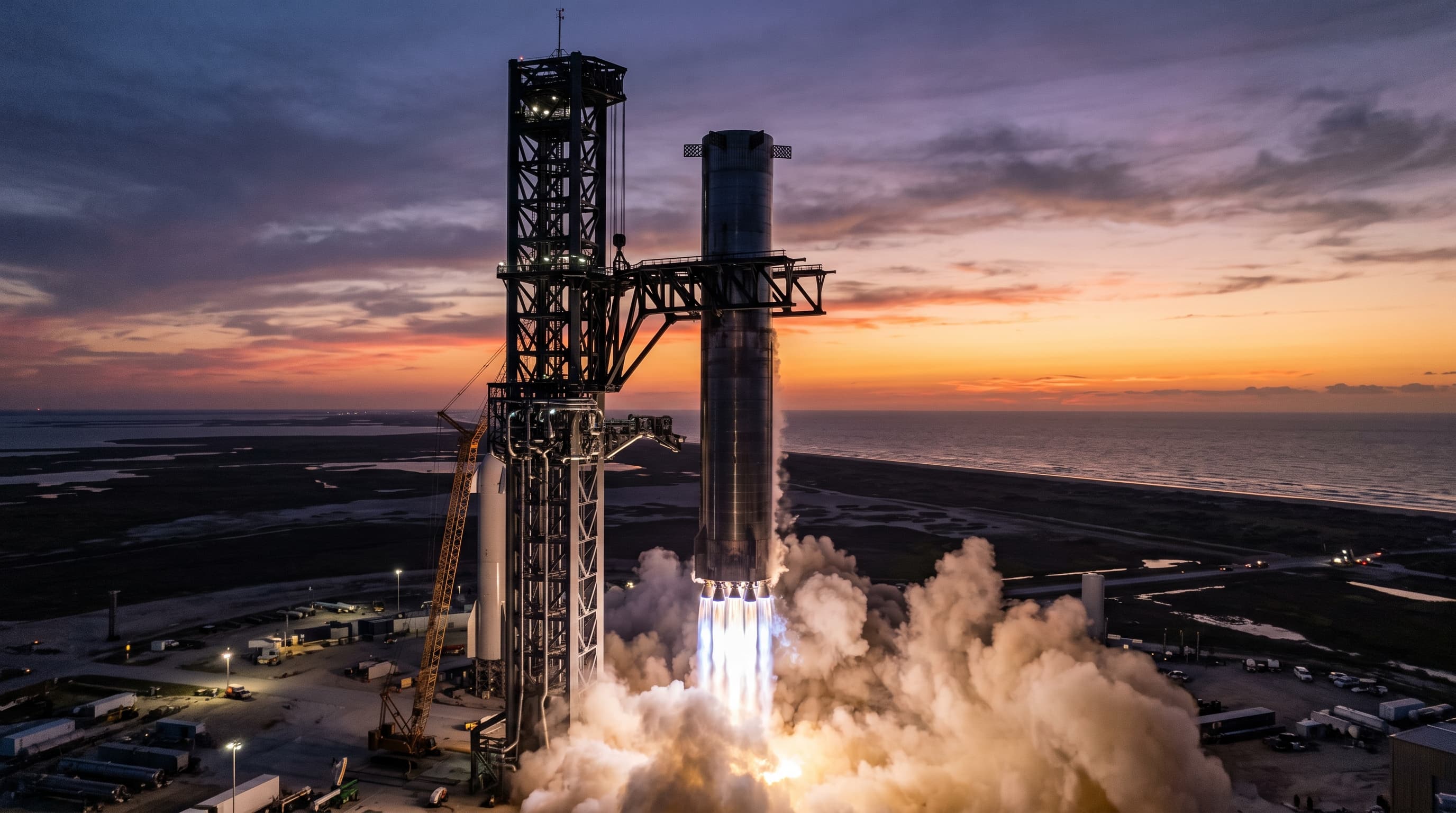
Super Heavy, view from below
Engines safed
05Reusability
On 13 October 2024, the tower that launched a Super Heavy booster reached out with two mechanical arms and caught it on the way back down.
05Flying home
For most of the history of spaceflight, rockets were thrown away after a single flight. Falcon 9's first stage turns around, flies itself back and lands upright, then launches again.
Falcon 9, return to launch site
Not to scale
After separation, the booster flips, burns back toward the coast, relights to survive re-entry and makes a final burn to touch down gently beside the pad it left minutes earlier.
06By the numbers
Determination leaves a paper trail. Every figure below comes from public flight records, current as of 26 September 2026.
Falcon launches per year
Falcon 1, Falcon 9 and Falcon Heavy, 2006 to 2025. From one failed launch a year to one every two to three days.
07Starlink
Starlink is the largest satellite constellation ever built. Its satellites fly in low Earth orbit and pass data to each other with lasers, bringing fast internet to ships, planes, farms and places cables never reached.
Each dot represents about 20 satellites. Drag to rotate.
08Human spaceflight
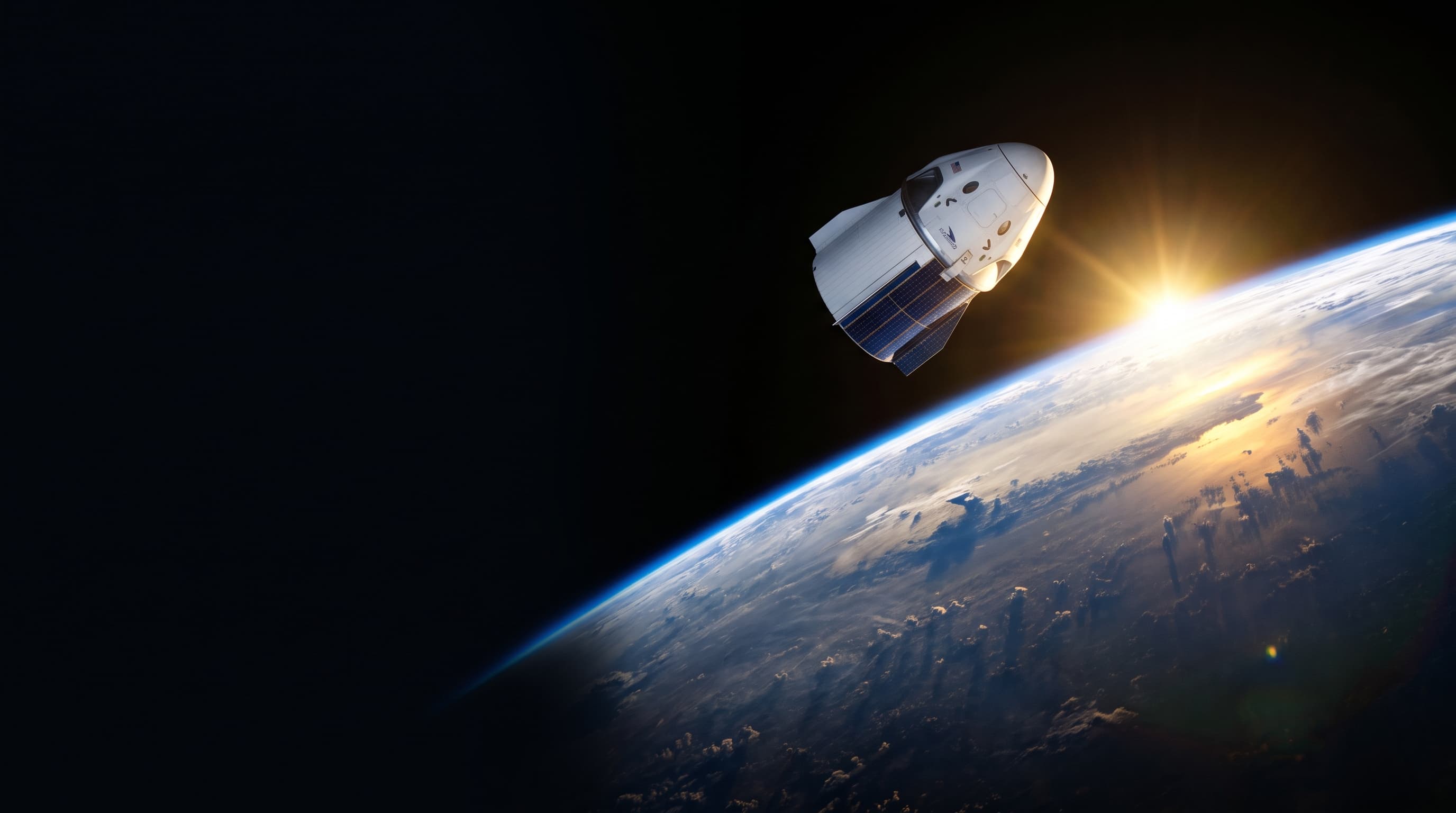
In 2020 Dragon became the first private spacecraft to carry astronauts to the International Space Station. Since then it has flown government crews, private missions and the first commercial spacewalk.
May 2020
Demo-2
The first astronauts to fly Dragon.
September 2021
Inspiration4
The first all-civilian crew in orbit.
September 2024
Polaris Dawn
The first commercial spacewalk.
April 2025
Fram2
The first crew to orbit over the poles.
09Milestones
Keep scrolling
2002
March 2002
Elon Musk starts a rocket company with one goal: make life multiplanetary.
2006
24 March 2006
Falcon 1 lifts off from Omelek Island in the Pacific and is lost within a minute.
2008
28 September 2008
Falcon 1 becomes the first privately developed liquid-fuelled rocket to reach Earth orbit.
2010
8 December 2010
The first spacecraft built and flown by a private company to be recovered from orbit.
2012
25 May 2012
The first commercial spacecraft to visit the International Space Station.
2015
21 December 2015
A Falcon 9 first stage returns from space and lands upright at Cape Canaveral.
2017
30 March 2017
A flight-proven booster launches again and lands again. Reuse becomes real.
2018
6 February 2018
27 engines light for the first time and two side boosters land side by side.
2019
May 2019
The first 60 satellites launch, the start of the largest constellation ever built.
2020
30 May 2020
The first crewed orbital launch from American soil since 2011, and the first by a private company.
2021
September 2021
The first all-civilian crew to orbit Earth.
2023
20 April 2023
The first integrated flight test of the largest rocket ever built.
2024
12 September 2024
Polaris Dawn opens Dragon's hatch to the vacuum of space for the first commercial spacewalk.
2024
13 October 2024
The launch tower plucks a returning Super Heavy booster out of the air with its mechanical arms.
2025
Full year
A record year: on average, a Falcon 9 lifted off every two to three days.
2026
22 May 2026
The next-generation Starship and Raptor 3 fly for the first time.
10Mars
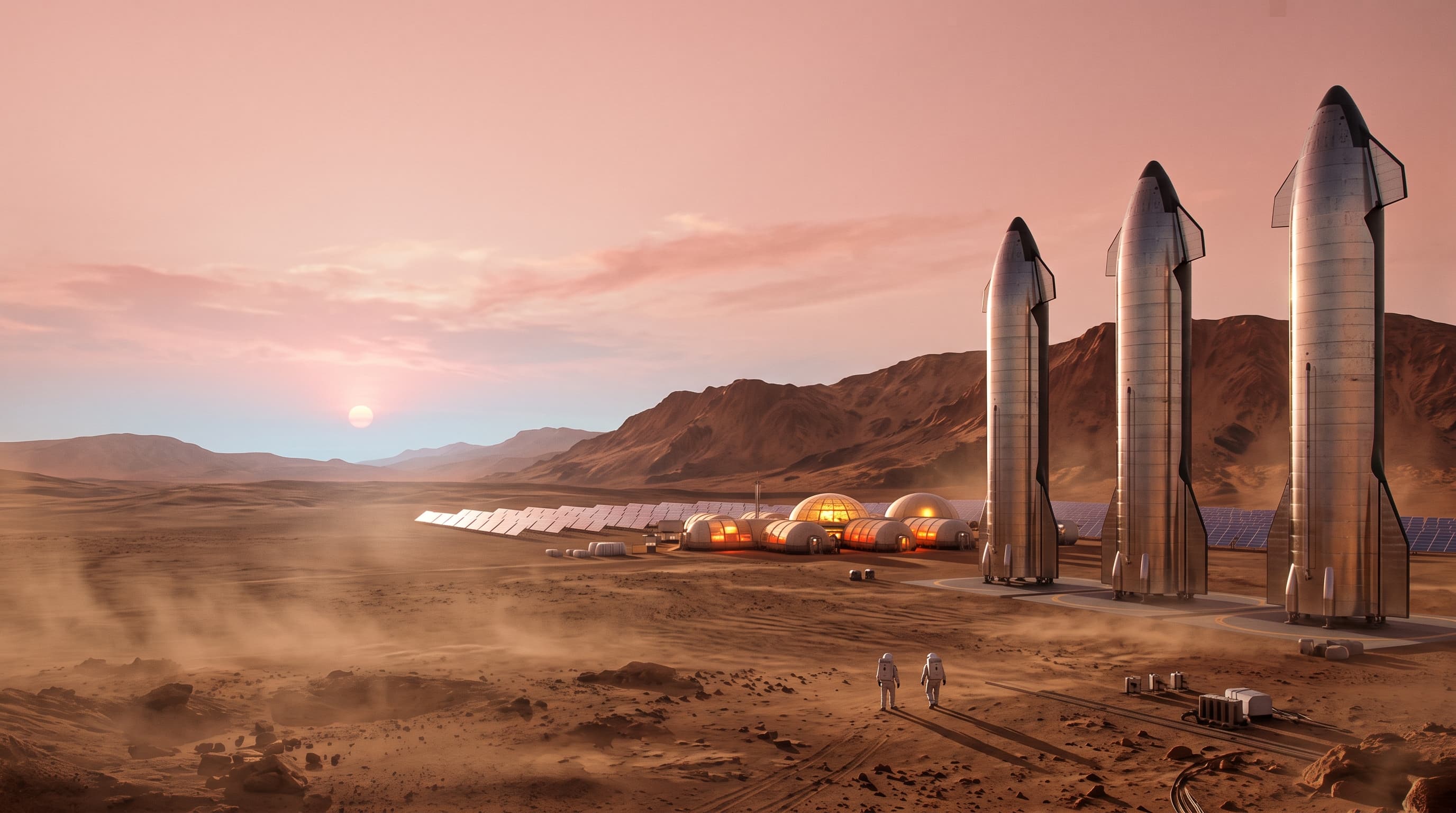
Starship is designed to carry crew and cargo to Earth orbit, the Moon, Mars and beyond. Refilled with propellant in orbit, each ship is built to land more than 100 tonnes on another world. NASA has already chosen a version of it to land astronauts on the Moon.
You want to wake up in the morning and think the future is going to be great, and that's what being a spacefaring civilization is all about.
Earth to Mars
Transfer orbit
The mission continues
Elon Musk
